Saturday, December 31, 2005

A public service - The British torture memos

[This news is being suppressed in the UK under the color of the Official Secrets Act. Bloggers all over the world are mirroring the documents.]


Help us beat the British government's gagging order by mirroring this information on your own site or blog!

Constituent: "This question is for Mr Straw; Have you ever read any documents where the intelligence has been procured through torturous means?" Jack Straw: "Not to the best of my knowledge... let me make this clear... the British government does not support torture in any circumstances. Full stop. We do not support the obtaining of intelligence by torture, or its use." - Foreign Secretary Jack Straw, election hustings, Blackburn, April 2005

I was summoned to the UK for a meeting on 8 March 2003. Michael Wood gave his legal opinion that it was not illegal to obtain and to use intelligence acquired by torture... On behalf of the intelligence services, Matthew Kydd said that they found some of the material very useful indeed with a direct bearing on the war on terror. Linda Duffield said that she had been asked to assure me that my qualms of conscience were respected and understood. - Ambassador Craig Murray, memo to the Foreign Office, July 2004

With Tony Blair and Jack Straw cornered on extraordinary rendition, the UK government is particularly anxious to suppress all evidence of our complicity in obtaining intelligence extracted by foreign torturers. The British Foreign Office is now seeking to block publication of Craig Murray's forthcoming book, which documents his time as Ambassador to Uzbekistan. The Foreign Office has demanded that Craig Murray remove all references to two especially damning British government documents, indicating that our government was knowingly receiving information extracted by the Uzbeks through torture, and return every copy that he has in his possession.

Craig Murray is refusing to do this. Instead, the documents are today being published simultaneously on blogs all around the world. The first document contains the text of several telegrams that Craig Murray sent back to London from 2002 to 2004, warning that the information being passed on by the Uzbek security services was torture-tainted, and challenging MI6 claims that the information was nonetheless "useful". The second document is the text of a legal opinion from the Foreign Office's Michael Wood, arguing that the use by intelligence services of information extracted through torture does not constitute a violation of the UN Convention Against Torture.

Craig Murray says:

In March 2003 I was summoned back to London from Tashkent specifically for a meeting at which I was told to stop protesting. I was told specifically that it was perfectly legal for us to obtain and to use intelligence from the Uzbek torture chambers. After this meeting Sir Michael Wood, the Foreign and Commonwealth Office's legal adviser, wrote to confirm this position. This minute from Michael Wood is perhaps the most important document that has become public about extraordinary rendition. It is irrefutable evidence of the government's use of torture material, and that I was attempting to stop it. It is no wonder that the government is trying to suppress this.

First document: Confidential letters from Uzbekistan

Letter #1 Confidential FM Tashkent

TO FCO, Cabinet Office, DFID, MODUK, OSCE Posts, Security Council Posts 16 September 02

SUBJECT: US/Uzbekistan: Promoting Terrorism

SUMMARY

US plays down human rights situation in Uzbekistan. A dangerous policy: increasing repression combined with poverty will promote Islamic terrorism. Support to Karimov regime a bankrupt and cynical policy.

DETAIL

The Economist of 7 September states: "Uzbekistan, in particular, has jailed many thousands of moderate Islamists, an excellent way of converting their families and friends to extremism." The Economist also spoke of "the growing despotism of Mr Karimov" and judged that "the past year has seen a further deterioration of an already grim human rights record". I agree.

Between 7,000 and 10,000 political and religious prisoners are currently detained, many after trials before kangaroo courts with no representation. Terrible torture is commonplace: the EU is currently considering a demarche over the terrible case of two Muslims tortured to death in jail apparently with boiling water. Two leading dissidents, Elena Urlaeva and Larissa Vdovna, were two weeks ago committed to a lunatic asylum, where they are being drugged, for demonstrating on human rights. Opposition political parties remain banned. There is no doubt that September 11 gave the pretext to crack down still harder on dissent under the guise of counter-terrorism. Yet on 8 September the US State Department certified that Uzbekistan was improving in both human rights and democracy, thus fulfilling a constitutional requirement and allowing the continuing disbursement of $140 million of US aid to Uzbekistan this year. Human Rights Watch immediately published a commendably sober and balanced rebuttal of the State Department claim.

Again we are back in the area of the US accepting sham reform [a reference to my previous telegram on the economy]. In August media censorship was abolished, and theoretically there are independent media outlets, but in practice there is absolutely no criticism of President Karimov or the central government in any Uzbek media. State Department call this self-censorship: I am not sure that is a fair way to describe an unwillingness to experience the brutal methods of the security services.

Similarly, following US pressure when Karimov visited Washington, a human rights NGO has been permitted to register. This is an advance, but they have little impact given that no media are prepared to cover any of their activities or carry any of their statements. The final improvement State quote is that in one case of murder of a prisoner the police involved have been prosecuted. That is an improvement, but again related to the Karimov visit and does not appear to presage a general change of policy. On the latest cases of torture deaths the Uzbeks have given the OSCE an incredible explanation, given the nature of the injuries, that the victims died in a fight between prisoners.

But allowing a single NGO, a token prosecution of police officers and a fake press freedom cannot possibly outweigh the huge scale of detentions, the torture and the secret executions. President Karimov has admitted to 100 executions a year but human rights groups believe there are more. Added to this, all opposition parties remain banned (the President got a 98% vote) and the Internet is strictly controlled. All Internet providers must go through a single government server and access is barred to many sites including all dissident and opposition sites and much international media (including, ironically, waronterrorism.com). This is in essence still a totalitarian state: there is far less freedom than still prevails, for example, in Mugabe's Zimbabwe. A Movement for Democratic Change or any judicial independence would be impossible here.

Karimov is a dictator who is committed to neither political nor economic reform. The purpose of his regime is not the development of his country but the diversion of economic rent to his oligarchic supporters through government controls. As a senior Uzbek academic told me privately, there is more repression here now than in Brezhnev's time. The US are trying to prop up Karimov economically and to justify this support they need to claim that a process of economic and political reform is underway. That they do so claim is either cynicism or self-delusion.

This policy is doomed to failure. Karimov is driving this resource-rich country towards economic ruin like an Abacha. And the policy of increasing repression aimed indiscriminately at pious Muslims, combined with a deepening poverty, is the most certain way to ensure continuing support for the Islamic Movement of Uzbekistan. They have certainly been decimated and disorganised in Afghanistan, and Karimov's repression may keep the lid on for years – but pressure is building and could ultimately explode.

I quite understand the interest of the US in strategic airbases and why they back Karimov, but I believe US policy is misconceived. In the short term it may help fight terrorism but in the medium term it will promote it, as the Economist points out. And it can never be right to lower our standards on human rights. There is a complex situation in Central Asia and it is wrong to look at it only through a prism picked up on September 12. Worst of all is what appears to be the philosophy underlying the current US view of Uzbekistan: that September 11 divided the World into two camps in the "War against Terrorism" and that Karimov is on "our" side.

If Karimov is on "our" side, then this war cannot be simply between the forces of good and evil. It must be about more complex things, like securing the long-term US military presence in Uzbekistan. I silently wept at the 11 September commemoration here. The right words on New York have all been said. But last week was also another anniversary – the US-led overthrow of Salvador Allende in Chile. The subsequent dictatorship killed, dare I say it, rather more people than died on September 11. Should we not remember then also, and learn from that too? I fear that we are heading down the same path of US-sponsored dictatorship here. It is ironic that the beneficiary is perhaps the most unreformed of the World's old communist leaders. We need to think much more deeply about Central Asia. It is easy to place Uzbekistan in the "too difficult" tray and let the US run with it, but I think they are running in the wrong direction. We should tell them of the dangers we see. Our policy is theoretically one of engagement, but in practice this has not meant much. Engagement makes sense, but it must mean grappling with the problems, not mute collaboration. We need to start actively to state a distinctive position on democracy and human rights, and press for a realistic view to be taken in the IMF. We should continue to resist pressures to start a bilateral DFID programme, unless channelled non-governmentally, and not restore ECGD cover despite the constant lobbying. We should not invite Karimov to the UK. We should step up our public diplomacy effort, stressing democratic values, including more resources from the British Council. We should increase support to human rights activists, and strive for contact with non-official Islamic groups. Above all we need to care about the 22 million Uzbek people, suffering from poverty and lack of freedom. They are not just pawns in the new Great Game.

MURRAY

--------------------------------------------------------------------------------

Letter #2 Confidential Fm Tashkent

To FCO 18 March 2003

SUBJECT: US FOREIGN POLICY

SUMMARY

1. As seen from Tashkent, US policy is not much focussed on democracy or freedom. It is about oil, gas and hegemony. In Uzbekistan the US pursues those ends through supporting a ruthless dictatorship. We must not close our eyes to uncomfortable truth.

DETAIL

2. Last year the US gave half a billion dollars in aid to Uzbekistan, about a quarter of it military aid. Bush and Powell repeatedly hail Karimov as a friend and ally. Yet this regime has at least seven thousand prisoners of conscience; it is a one party state without freedom of speech, without freedom of media, without freedom of movement, without freedom of assembly, without freedom of religion. It practices, systematically, the most hideous tortures on thousands. Most of the population live in conditions precisely analogous with medieval serfdom.

3. Uzbekistan's geo-strategic position is crucial. It has half the population of the whole of Central Asia. It alone borders all the other states in a region which is important to future Western oil and gas supplies. It is the regional military power. That is why the US is here, and here to stay. Contractors at the US military bases are extending the design life of the buildings from ten to twenty five years.

4. Democracy and human rights are, despite their protestations to the contrary, in practice a long way down the US agenda here. Aid this year will be slightly less, but there is no intention to introduce any meaningful conditionality. Nobody can believe this level of aid – more than US aid to all of West Africa – is related to comparative developmental need as opposed to political support for Karimov. While the US makes token and low-level references to human rights to appease domestic opinion, they view Karimov's vicious regime as a bastion against fundamentalism. He – and they – are in fact creating fundamentalism. When the US gives this much support to a regime that tortures people to death for having a beard or praying five times a day, is it any surprise that Muslims come to hate the West?

5. I was stunned to hear that the US had pressured the EU to withdraw a motion on Human Rights in Uzbekistan which the EU was tabling at the UN Commission for Human Rights in Geneva. I was most unhappy to find that we are helping the US in what I can only call this cover-up. I am saddened when the US constantly quote fake improvements in human rights in Uzbekistan, such as the abolition of censorship and Internet freedom, which quite simply have not happened (I see these are quoted in the draft EBRD strategy for Uzbekistan, again I understand at American urging).

6. From Tashkent it is difficult to agree that we and the US are activated by shared values. Here we have a brutal US sponsored dictatorship reminiscent of Central and South American policy under previous US Republican administrations. I watched George Bush talk today of Iraq and "dismantling the apparatus of terror… removing the torture chambers and the rape rooms". Yet when it comes to the Karimov regime, systematic torture and rape appear to be treated as peccadilloes, not to affect the relationship and to be downplayed in international fora. Double standards? Yes.

7. I hope that once the present crisis is over we will make plain to the US, at senior level, our serious concern over their policy in Uzbekistan.

MURRAY

--------------------------------------------------------------------------------

Letter #3 CONFIDENTIAL FM TASHKENT

TO IMMEDIATE FCO TELNO 63 OF 220939 JULY 04 INFO IMMEDIATE DFID, ISLAMIC POSTS, MOD, OSCE POSTS UKDEL EBRD LONDON, UKMIS GENEVA, UKMIS MEW YORK

SUBJECT: RECEIPT OF INTELLIGENCE OBTAINED UNDER TORTURE

SUMMARY

1. We receive intelligence obtained under torture from the Uzbek intelligence services, via the US. We should stop. It is bad information anyway. Tortured dupes are forced to sign up to confessions showing what the Uzbek government wants the US and UK to believe, that they and we are fighting the same war against terror.

2. I gather a recent London interdepartmental meeting considered the question and decided to continue to receive the material. This is morally, legally and practically wrong. It exposes as hypocritical our post Abu Ghraib pronouncements and fatally undermines our moral standing. It obviates my efforts to get the Uzbek government to stop torture they are fully aware our intelligence community laps up the results.

3. We should cease all co-operation with the Uzbek Security Services they are beyond the pale. We indeed need to establish an SIS presence here, but not as in a friendly state.

DETAIL

4. In the period December 2002 to March 2003 I raised several times the issue of intelligence material from the Uzbek security services which was obtained under torture and passed to us via the CIA. I queried the legality, efficacy and morality of the practice.

5. I was summoned to the UK for a meeting on 8 March 2003. Michael Wood gave his legal opinion that it was not illegal to obtain and to use intelligence acquired by torture. He said the only legal limitation on its use was that it could not be used in legal proceedings, under Article 15 of the UN Convention on Torture.

6. On behalf of the intelligence services, Matthew Kydd said that they found some of the material very useful indeed with a direct bearing on the war on terror. Linda Duffield said that she had been asked to assure me that my qualms of conscience were respected and understood.

7. Sir Michael Jay's circular of 26 May stated that there was a reporting obligation on us to report torture by allies (and I have been instructed to refer to Uzbekistan as such in the context of the war on terror). You, Sir, have made a number of striking, and I believe heartfelt, condemnations of torture in the last few weeks. I had in the light of this decided to return to this question and to highlight an apparent contradiction in our policy. I had intimated as much to the Head of Eastern Department.

8. I was therefore somewhat surprised to hear that without informing me of the meeting, or since informing me of the result of the meeting, a meeting was convened in the FCO at the level of Heads of Department and above, precisely to consider the question of the receipt of Uzbek intelligence material obtained under torture. As the office knew, I was in London at the time and perfectly able to attend the meeting. I still have only gleaned that it happened.

9. I understand that the meeting decided to continue to obtain the Uzbek torture material. I understand that the principal argument deployed was that the intelligence material disguises the precise source, ie it does not ordinarily reveal the name of the individual who is tortured. Indeed this is true – the material is marked with a euphemism such as "From detainee debriefing." The argument runs that if the individual is not named, we cannot prove that he was tortured.

10. I will not attempt to hide my utter contempt for such casuistry, nor my shame that I work in and organisation where colleagues would resort to it to justify torture. I have dealt with hundreds of individual cases of political or religious prisoners in Uzbekistan, and I have met with very few where torture, as defined in the UN convention, was not employed. When my then DHM raised the question with the CIA head of station 15 months ago, he readily acknowledged torture was deployed in obtaining intelligence. I do not think there is any doubt as to the fact

11. The torture record of the Uzbek security services could hardly be more widely known. Plainly there are, at the very least, reasonable grounds for believing the material is obtained under torture. There is helpful guidance at Article 3 of the UN Convention; "The competent authorities shall take into account all relevant considerations including, where applicable, the existence in the state concerned of a consistent pattern of gross, flagrant or mass violations of human rights." While this article forbids extradition or deportation to Uzbekistan, it is the right test for the present question also.

12. On the usefulness of the material obtained, this is irrelevant. Article 2 of the Convention, to which we are a party, could not be plainer: "No exceptional circumstances whatsoever, whether a state of war or a threat of war, internal political instability or any other public emergency, may be invoked as a justification of torture."

13. Nonetheless, I repeat that this material is useless – we are selling our souls for dross. It is in fact positively harmful. It is designed to give the message the Uzbeks want the West to hear. It exaggerates the role, size, organisation and activity of the IMU and its links with Al Qaida. The aim is to convince the West that the Uzbeks are a vital cog against a common foe, that they should keep the assistance, especially military assistance, coming, and that they should mute the international criticism on human rights and economic reform.

14. I was taken aback when Matthew Kydd said this stuff was valuable. Sixteen months ago it was difficult to argue with SIS in the area of intelligence assessment. But post Butler we know, not only that they can get it wrong on even the most vital and high profile issues, but that they have a particular yen for highly coloured material which exaggerates the threat. That is precisely what the Uzbeks give them. Furthermore MI6 have no operative within a thousand miles of me and certainly no expertise that can come close to my own in making this assessment.

15. At the Khuderbegainov trial I met an old man from Andizhan. Two of his children had been tortured in front of him until he signed a confession on the family's links with Bin Laden. Tears were streaming down his face. I have no doubt they had as much connection with Bin Laden as I do. This is the standard of the Uzbek intelligence services.

16. I have been considering Michael Wood's legal view, which he kindly gave in writing. I cannot understand why Michael concentrated only on Article 15 of the Convention. This certainly bans the use of material obtained under torture as evidence in proceedings, but it does not state that this is the sole exclusion of the use of such material.

17. The relevant article seems to me Article 4, which talks of complicity in torture. Knowingly to receive its results appears to be at least arguable as complicity. It does not appear that being in a different country to the actual torture would preclude complicity. I talked this over in a hypothetical sense with my old friend Prof Francois Hampson, I believe an acknowledged World authority on the Convention, who said that the complicity argument and the spirit of the Convention would be likely to be winning points. I should be grateful to hear Michael's views on this.

18. It seems to me that there are degrees of complicity and guilt, but being at one or two removes does not make us blameless. There are other factors. Plainly it was a breach of Article 3 of the Convention for the coalition to deport detainees back here from Baghram, but it has been done. That seems plainly complicit.

19. This is a difficult and dangerous part of the World. Dire and increasing poverty and harsh repression are undoubtedly turning young people here towards radical Islam. The Uzbek government are thus creating this threat, and perceived US support for Karimov strengthens anti-Western feeling. SIS ought to establish a presence here, but not as partners of the Uzbek Security Services, whose sheer brutality puts them beyond the pale.

MURRAY

Second Document - summary of legal opinion from Michael Wood arguing that it is legal to use information extracted under torture:

From: Michael Wood, Legal Advisor

Date: 13 March 2003

CC: PS/PUS; Matthew Kidd, WLD Linda Duffield

UZBEKISTAN: INTELLIGENCE POSSIBLY OBTAINED UNDER TORTURE

1. Your record of our meeting with HMA Tashkent recorded that Craig had said that his understanding was that it was also an offence under the UN Convention on Torture to receive or possess information under torture. I said that I did not believe that this was the case, but undertook to re-read the Convention.

2. I have done so. There is nothing in the Convention to this effect. The nearest thing is article 15 which provides: "Each State Party shall ensure that any statement which is established to have been made as a result of torture shall not be invoked as evidence in any proceedings, except against a person accused of torture as evidence that the statement was made."

3. This does not create any offence. I would expect that under UK law any statement established to have been made as a result of torture would not be admissible as evidence.

[signed] M C Wood Legal Adviser

Tuesday, December 20, 2005

Scott eVest - Fourth Time's the Charm

One of the best things about Scott eVest is that they listen to their customers. With version 4.0 of their jackets they've fixed almost everything that didn't quite work.

I still don't like many of the zippers. They are too small and too fine-toothed to open and close easily, especially with one hand. This is particularly troublesome on the Tactical 4.0 model. The side zippers allow law enforcement officers or the armed citizen to draw without opening the entire coat. Larger, easy to open zippers could save precious seconds and an innocent person's life. Better yet, they could have gone with magnetic closures.

The silky lining doesn't breathe and holds sweat. This can be a real problem for the well-equipped geek who carries ten pounds of stuff around with him.

Here's what I like...

The larger pockets open at the top and zip down the side. If you have something large in one of them you can get at it quickly and easily.

Wrists and several of the external pockets have magnetic closures as well as zippers. One handed access is quick and easy. In previous versions these could only be found on the windflap that covers the zipper. Note: There is some concern that magnets could interfere with pacemakers. If you have a pacemaker consult your physician about this.

There is the beginning of a velcro accessory support system. 5-11 Tactical and Blackhawk pioneered the use of large velcro patches that can support a variety of modular pouches such as holsters, magazine pouches, flashlight carriers and handcuff cases. The new eVest has velcro in a few strategic places that is compatible with these systems.

Several of the pockets have elastic loops that fit everything from pens to larger things. A single stack 9mm pistol fits nicely into one of them. The trigger guard is covered. Access is pretty fast. It doesn't print. It may not be ideal, but it's not bad at all. It also perfectly fits my emergency backup beverage supply. A standard size bottle of Gorilla Juice or Bawls fits perfectly and doesn't move around.

There are more small pockets, especially pockets inside pockets. Earlier versions tended towards a few large pockets. Most geeks I know have a lot of little things, not a few huge ones. The new design reflects this.

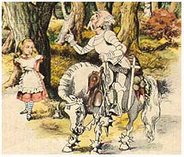
So I'm happy. I can carry around all of my stuff. And my wife calls me her White Knight. That would be a lot more reassuring if I didn't know she was talking about the overburdened character from Through the Looking Glass....


Caught on the Horns of a Prisoner's Dilemma

I'm from a family of doctors - father, grandfather and a sister. My other sister is a physical therapist. Much of my work has been in and around hospitals from nursing to IT to research. I was raised to believe that lawyer jokes were the only acceptable form of vicious ethnic humor. I'm still pretty much that way. Most doctors are hardworking and knowledgeable. It is impossible to guarantee a good result, just good treatment. As Hippocrates said "Life is short and the art long, the occasion instant, experiment perilous, decision difficult." Besides, I owe my life to an exceptional team of physicians at the local medical school. They did a superb job with an advanced condition from a torturous operation through excellent followup care. I'm probably going to live out my normal span, G-d willing, which wasn't at all a sure bet two years ago.

So why am I irritated with some of my team? To put it bluntly, they gave me a bad answer to a direct question, and it may have life-altering consequences. Actually, it already has. I won't bore you with the organ recital. Suffice it to say, my fertility was impaired by the treatment. At my wife's age a temporary problem could put our last chance at children out of reach. I asked several members of the department about banking sperm. They said there was no cause for concern, that it wouldn't be an issue.

They were wrong. It was. And I'm out of pocket a fair amount of money trying to kick start my gonads into action. The doctors are stonewalling, telling the Patients' Advocate office that there is "no science" to support my concerns. This in the face of many peer-reviewed articles in the medical literature backing up the claim. All I'm looking for is a tiny change in the procedures and some help on the portion of my iatrogenic expenses that aren't covered by insurance, the ones which could have been avoided with better advice. Quite reasonable all things considered.

Why is this happening? It's very simple, really. We have entered the age of mistrust between doctor and patient. The fear of litigation on one hand and the loss of trust in the medical profession on the other have made it difficult to work things out amicably. The moment there is a complaint the medical-legal immune system activates. Any doctor or department knows it is a target for lawsuits. The best means of reducing that risk is to say nothing that could be taken wrong in court. This works well as a defensive tactic most of the time. The problem arises when a patient with a grievance does not want to get into a legal battle and is not looking for a payday but wants his concerns addressed. The strength of the defense does not easily allow lesser means.

Enter the Prisoner's Dilemma.

In 1984 Axelrod came up with a very insightful way of looking at decisions involving trust by using non-zero-sum game theory. Two parties can choose to cooperate or "defect". If both cooperate they get a good result. If both defect they both get a bad result. If one cooperates and the other defects the defector gets a good result, and the defector gets a bad result. It has been applied to everything from nuclear war policy to prisoner interrogations.

The classic best strategy is what they call "tit for tat". You start off by trusting the other player and cooperating. After that you react according to his last move. If he cooperates, you cooperate. If he defects, you defect.

What we have here is a case where one player has decided that the patients as a class have already defected. As the other player I have to choose a strategy, preferably one that will allow both of us to cooperate and thus ensure a good mutual outcome.


Monday, November 21, 2005

Excellent Experience This Weekend - Edmonds Martial Arts Academy

I've talked to Bobbe Edmonds on the phone a few times. He seemed like a really worthwhile guy, and we always said that he would have to drive down or we'd drive up to Seattle and meet in real life some time, maybe Thanksgiving weekend. Early this week we found out that work would take him out of the area for a few weeks. So Tiel and I said "Well, why not go and meet him this weekend?"

I'm really glad we did.

First off, Bobbe and his wife are really wonderful people, the kind who you feel like you've known your whole life. Their warmth and hospitality would do credit to the Middle East or an old-fashioned Southern household.

For those of you who aren't familiar with Bobbe, take a look at his website - http://emaa.us He's been a training demon since his teens. Lots of really solid work under a variety of very good teachers, enough certificates to wallpaper an apartment and enough "been there, done that" to give what he teaches real world credibility.

His school, like many of the best, is crammed into in a tiny garage. It's not how he makes a living, so he can be selective about his students and teach the way he likes. It shows. I was very impressed with his students. They worked hard and picked up things quickly. Many of them surprised me. They moved better than people with a couple year's more experience. They had their basics and fundamentals burned in. It's a real testament to their teacher. It's obvious that Bobbe spends a lot of time figuring out what to teach and how to teach it. He's done an excellent job of taking a lot of material and organizing it in ways that make sense. And if one explanation or demonstration doesn't work for a student he will keep trying until he finds a way that clicks.

The atmosphere was informal. There was a lot of joking and friendly kidding, but when it was time to work, everyone worked. One of the things I've always liked about the good Southeast Asian MA teachers I've met is that they understand that mutual trust is necessary if the students are going to learn. To really trust people who are doing potentially lethal things with or to you in class it helps to be relaxed, not grim or on edge. We didn't see formal shows of respect. We saw an awful lot of the real thing. The students might joke about their teacher's baldness. They would jump in front of hungry lions for him. And they know he'd do the same for them.

We spent a good part of the night looking through his library. There were lots of martial arts books, of course. There was a huge amount of material on teaching in general and teaching martial arts in particular. It's rare for a martial artist to do that much outside work to improve his skills as an instructor.

We attended two classes, one eskrima, one silat.

The eskrima class taught us a lot we didn't know or had forgotten. The drills made sense. They had practical application. We've taken home some of his stuff on changing lines and passing the weapon that was a huge gap in our training. The work on changing ranges was very well thought out. The teaching progression was well integrated with other parts of the curriculum.

After lunch we went to the silat class. Bobbe has obviously learned an awful lot of silat from many gurus over the years. He's made an excellent stab at taking a lot of technique, drills and curriculum and reworking it as principle-based and systematic. A lot of it isn't exactly as we learned it, of course. We had different teachers. It all made sense and was efficient and effective.

If you are in the Seattle area and looking for top-flight instruction from a genuinely good person in Filipino and Indonesian martial arts you couldn't do much better than the Edmonds Martial Arts Academy.

Wednesday, November 16, 2005

The Difference Between Teaching Martial Arts and Women's Self Defense Part III: Answer a Question With a Question. And What's Wrong With That?

Now that the waters have been completely muddied and the distinctions between combatives, martial arts, self defense, defensive tactics and martial sports are blurred it's time to pull back and revisit the reasons why I don't recommend "martial arts" as a basis for women's self defense. At first glance this seems strange. Martial arts teach you to fight. They use training methods that are designed to take a novice and turn out someone who can kick serious booty. Well, no. Not really. Not for the most part. When they do they aren't always appropriate for the short term needs of many of the women who want to be able to defend themselves relatively quickly.

If I had to choose one thing from engineering to bring over into martial arts in the broader sense it would be a question.

What problem are you trying to solve?


Get that one right and the best way to do things will usually suggest itself. Get it wrong and you can spend a lot of time and effort correcting your aim against the drag of sunk costs and assumption drag. Or worse, you'll keep trying to do more of what failed before in the hope that it will work this time. Teaching people combative skills is like any other problem. You need a good idea of the situation, the goals, the environment your solution will have to work in and the constraints it will operate under. I'm an engineer and a design geek. If you want poetry go talk to my wife. If you're looking for really cool spiritual techniques and esoteric martial arts wisdom go see Mushtaq. If you want the Exotic Secrets of the Mystic Orient (or is it the Mystic Secrets of the Exotic Orient?) find a wall to sit in front of and a bunch of monks to keep you honest about it. From me you'll get engineering.

Here's a handful of questions that will help frame the problem.
  • Who Are the Students?
  • What Are They Looking For?
  • What Do They Need?
  • Who Will They Be Fighting?
  • How Much Time Do They Have?
  • What Environment Do They Operate Under?
  • What Tools Are Available to Them?
  • How Expendable Are They?

Who Are the Students?

You can't have a class without students. What are they like? What do they bring with them? What are their strengths and weaknesses? How homogenous is the group? How many people are in it? How physically skilled are they? What sort of collective identity does the group have? What's the range of ages? Physical fitness? Intelligence? Aggression? The best training methods and techniques in the world won't do any good if they are the wrong ones for the situation.

What Are They Looking For?

Most people who take up martial arts want to be able to fight in one arena or another. It might be friendly sparring against people from the same system. It could be No Holds Barred Mixed Martial Arts. It could be criminals fighting other criminals or assaulting victims. Soldiers war on the battlefield. Police make arrests. Self defense students want to keep from being crime victims.

That isn't the only goal. Some people take up martial arts to have an exotic hobby, to do physical performance art, for cultural conservation, personal growth, or socializing. Some do it as part of religious or philosophical training. Anyone who keeps at it for more than a little while has to enjoy it. Why would a sane person get banged up for years and spend a lot of time and sweat and maybe money at something he or she hated?

There may be more than one answer. They can - and probably should - change over time.

What Do They Need?

This is really two questions. The first is what do they need to get what they want? The second is what do they need as opposed to what they want?

Who Will They Be Fighting?

This should be obvious. It bears some repeating. Will they be going up against people who are physically like them? Bigger? Stronger? Better trained? Better equipped? More or less aggressive? Intent on killing the students, beating them in a competition, getting status or doing a crime with the least amount of risk? Is there one opponent or many? Is it possible that the adversaries are open to some sort of resolution other than fighting?

How Much Time Do They Have?

Some systems achieve their best results in a few dozen hours. Others are open-ended, requiring years to perfect. A few students will come back for refresher courses or further instruction. Others will be taught once and never again.

What Environment Do They Operate Under?

Every confrontation happens somewhere. The physical environment is always important. Harimau Silat evolved in an area where people had strong legs and footing was poor. Mixed Martial Arts competitions assume a slightly padded ring with a fence. A sporting event is governed by rules. A police officer operates under the law and his or her department's policies and procedures. Soldiers have rules of engagement and the UCMJ. In less formal fights the combatants come with socially implanted ideas about proper behavior, even if they are only "All eyeballs sucked out of the other guy's skull must be spat out, not swallowed," and varying degrees of respect for the law.

What Tools Are Available to Them?

Every Colt Revolver used to have the following doggerel engraved on it:

Fear no man,
No matter what his size.
When danger threatens
Call on me and I will equalize.
More than that, what sort of things will the students be able to bring to the fight? This can include weapons, attitudes, technique, friends, mental attributes and any number of others.

How Expendable Are They?

The military expects to lose a certain number of recruits during training. After that every soldier and entire units are expendable as long as the mission is fulfilled. Every police officer hopes and expects to go home at the end of the shift. The job may require her or him to die in the line of duty. Someone who takes up self defense does it precisely because she does not consider her life something that can be thrown away as the result of a cost/benefit analysis. Staying alive and healthy is the mission.

There are some of the important questions. In the next installment let's look at some answers.

Wednesday, October 19, 2005

A Weekend Well Spent

This weekend Tiel and I travelled to Grand Rapids for the third annual San Yun Do camp. We haven't gone to many seminars in the last few years, Guru Cliff Stewart's, the annual AWSDA convention, and our own teacher's first training for all of his students. We almost didn't go. If it hadn't been for a last minute deal on travelocity we couldn't have afforded the airfare. We're very glad we went. This was everything a martial arts seminar should be.

The most important ingredient in events like this is the people. If the mix is wrong, nobody will learn. If the teachers can't connect with the students or a few too many assholes show up it just isn't going to work. None of that happened. The instructors all had well organized blocks of instruction and presented them well. The participants all worked very hard. It was very collegial, very friendly.

Chuck and Jeannie were wonderful hosts, warm, generous friendly. We felt like we had known them our whole lives after a few minutes. The dojo is a converted boathouse just a few feet from their home. There's something special about a training hall that's part of the teachers' and students' everyday life, something that makes (as Musashi said) "your fighting stance your everyday stance and your everyday stance your fighting stance".

Friday was a day for stories, toys and meeting. People came in and out of our hosts' house until early in the morning showing off knives, swords, sticks, WEKAF armor and other implements of destruction and mayhem, talking story, eating and getting to know one another. It made a difference. I'm increasingly convinced that you can't train at your best with strangers. There's always that bit of reserve and not exactly mistrust but lack of trust that makes it difficult to really let go. The afternoon and evening before helped break the ice marvellously.

It also gave us a chance to see the latest blades that Chuck and Mushtaq are working on. The knife world is full of the SpecOpMilTHX-1138 Eviscerator and its companion the 14 inch CQCBabyKilling Anatomic Deficiency Compensator. These are nothing like that. They're small, light, and wonderfully ergononomic. You could certainly defend yourself with them, but they're primarily working knives that you can fight with, not fighting knives that you can work with. The prices are very reasonable. The work is entirely by hand. The blades are very comfortable in the hand.

As Mushtaq says "Even poor folks deserve custom knives".

Saturday was martial arts.

The day started off with Steve Van Harn teaching Eskrima. Steve is a WEKAF champion who is slowly being seduced over to the Dark Side (Silat). He's a hell of a fighter and an even better human being. Steve covered some advanced footwork and upper body/lower body coordination. It was enlightening. We've mostly done short range footwork patterns so far.

Phil Lewis, a long time Kenpo, Wing Chun and Arnis instructor, did a very pleasant unit on partner training drills. It really took me back to my JKD and Eskrima days. It's obvious that Phil has been teaching for quite a while and has that air of casual competence that good sifus develop.

Mushtaq did a long unit on Piper, a type of knife work practiced by South African criminals. It has nothing to do with self defense or martial arts. It's something thugs use to do crime. His aim, which I heartily endorse, is that good people need to know about this stuff so they won't be defenseless against it. As more people from that part of the world end up in the West some criminals will come along. Law Enforcement and private citizens need to know what they might encounter and have enough familiarity to counter it.

Piper reminded me a lot of Capoeira, not that there was any jumping, cartwheeling or kicking. It had the same relaxed, rhythmic quality and used similar odd off-beat timing. Honestly, that's the most important difference between it and other things I've seen. The movements are similar all over the world, but different cultures have different ways of carrying themselves. Americans are much tighter and inhibited in the way they move. I'm afraid the jokes about white guys dancing have a lot of truth to them. Rhythm, timing and relaxation can be deadly tools.

Chuck and his assistants Sterling Heibeck and Don Young rounded out the day with an excellent unit on kicking. He's come up with some very innovative and efficient ways of using kicks. I only wish I were a good enough kicker to have really taken advantage of what he had to offer.

Sterling also led an excellent short course on weapons retention at extremely close range.

Sunday was dedicated to healing arts. Mushtaq did a remarkable short course on how to breathe, how to walk, how to use equipment like weighted balls and clubs and other ways of undoing the damage that training causes. We learned a bit about how Chi Kung really works - not the mystical ethereal airy fairy stuff, but solid stuff about breath and physical movement. There was an introduction to Apache running and a few other bits and pieces.

Afterwards we had a special presentation of Maharlika Kuntaw. Bill Anderson and Buzz Smith were very, very impressive. They had that combination of analysis and intuitive understanding that separates the merely good teacher from the really exceptional one. It was principle based, progressive and extremely effective. If you have a chance to learn from either of these gentlemen please take advantage of it.

Innovative Martial Arts/San Yun Do tries to have seminars like this twice a year. It's well worth the trip.

Thursday, October 06, 2005

Tag, I'm It.

Just got this from Tiel:

Seven things I plan to do, insh'Allah:

  1. Get an advanced degree
  2. Become a Guru in Serak
  3. Train up at least one student as a Guru in Serak
  4. Become a father
  5. Come out as a transphibian
  6. Finish the backlog of articles and programming projects
  7. With G-d's help become more what He wants me to be.

Seven things I can do, subhan'Allah:

  1. Teach a woman to tear an attacker's head off and beat him to death with it
  2. Play the djembe tolerably, the dununs marginally and the Congas poorly
  3. Write clear prose
  4. Analyze a problem
  5. Overanalyze a problem
  6. Care for the sick and comfort the distressed
  7. Cook
Seven things I can't do:

  1. Sing
  2. Relax
  3. Treat people as things
  4. Keep my mouth shut
  5. Get up from Sempok on the right without using my hands
  6. Draw
  7. See clutter that is blindingly obvious to my wife

Seven things I say most often:

  1. Djurus
  2. On the other hand...
  3. I didn't vote for him
  4. You're paranoid, but are you paranoid enough?
  5. Papillon! Sev!
  6. What does this module do?
  7. Oy vey
Seven people I want to pass this tag to:
  1. Mushtaq
  2. Terry
  3. Steve Barnes
  4. My python L33t (Things I can do: coil, slither, hide, escape, catch mice, make little snakes...)
  5. Janka
  6. President Cheney
  7. Gahan Wilson

Tuesday, October 04, 2005

More Tests

Since Mushtaq has dug out the OK Cupid Alignment test for the D&D crowd it's probably time to throw down for my favorite, the Could You Be A Gunslinger quiz.

For the record...

The Law (alive)
You scored 74% vigilanteness, 37% outlawsity and 76% quickdraw skill!

You're tough, you're quick, you're skilled, but you have self control. I like you. If you had any gunslinging career, you'd be a lawman. Sheriff, marshall, deputy, whatever, you'd maintain the peace in the poor towns that need it. You have the sense of justice not to kill everyone you meet. One problem, though. You're either lacking the skills or the attitude to truly be an awesome gunslinger. You'd be decent, to be sure, but you wouldn't be the best.

That showdown really had you test your mettle. You had to kill the guy, and while it goes against what you believe in, sometimes the law has to be laid down in the streets, not in court. You'll walk away from it a better, man, though, because you'll know what you're capable of doing.

Your gunslinger character would probably be the grizzled old veteran, or the rookie who has to prove his worth.

Sunday, September 18, 2005

The Difference Between Teaching Women's Self Defense and Martial Arts: Part II: Use Only As Directed


What a shock the last couple weeks have been. Hurricane Katrina and the complete hoseout that followed have made this blog seem pretty insignificant. I think it's the future for everyone living in low-lying coastal areas, but that's a subject for a completely different essay.

Where were we? Oh, yes, martial arts and women's self defense. I'm going to take a detour into assumptions and the limits of what's normal. It's not exactly women's self defense. It's applicable to anyone.

There's an old joke about training.

An Arab general was talking to an American colleague about the ongoing hostilities with Israel.

"I don't understand it. We have just as many tanks and airplanes. We have more men, and they're very brave. Our officers had the best training the Soviet Union offered. But we still keep losing."

"That's interesting. What did they teach you?"

"Pull back and wait for winter."

Most of the emergency preparations are of two sorts, short term emergencies and the total breakdown of civilization.

The first scenario includes acute problems. The power outage in the Northeast a few years back, a bad fire season in the West, ice storms, most hurricanes, the Santa Cruz earthquake, epidemics that don't stretch public health past the breaking point.

The second sort is the domain of classic "survivalist" literature from 1950s bomb-shelter manuals to Backwoods Home. Living off-grid and permanent self sufficiency are the hallmarks of this approach. There is much to recommend the lifestyle if you can manage the tradeoffs that go with it. Many people in the survivalist community have an Apocalyptic view of the world in which nuclear war, military occupation, plague, famine or the Christian End Times destroy society for years.

Let's leave the long term survivalist scenarios out for now. They are certainly worth considering, but right now I'm more interested in things on the level of Hurricane Katrina. The dislocation will probably be a matter of weeks, possibly months. Normal order will be restored eventually.

Consider two very important sorts of training - first aid and self defense. What do most instructions assume? When do these assumptions hold? What happens when they don't?

Most first aid courses teach triage, maintenance of vital signs, and stabilization. This is all very good. Under normal circumstances emergency medical services will show up in reasonable time and transport the patient to a hospital. Your job is to keep him or her alive until they get there and take over. What happens when the EMTs and the medevac helicopter aren't going to show up? Direct pressure on a wound or a tourniquet are great when they only need to be applied for a short time. They aren't permanent solutions. Cholera can kill rapidly. Immobilizing the fracture is a good start. Sooner or later it has to be set. These fall outside the parameters of normal emergency training but are very near fetched in a an intermediate-term event.

Some of the solutions also fall outside the law. Many of the measures in Where There Is No Doctor, Where There Is No Dentist, Ditch Medicine and Survival Nurse: Running and Emergency Nursing Station Under Adverse Conditions are full of useful material. Much of it would come under the heading of practicing medicine without a license in normal times. If there is no regular health care available it could save lives.

The list goes on. For minor incidents having a cell phone as well as a landline may be enough. When things get bad we rely on heroes like The Interdictor, who kept the OC3s running and got the real uncensored Truth out of New Orleans during the disaster. If the situation goes completely wahoonie-shaped the nearly forgotten but absolutely essential Amateur Radio Relay League never fails to keep vital traffic going. How many people have Ham radio licenses these days? I'm studying to get mine back.

Then there is the defense of your home, your loved ones and yourself.

What does most training assume?

Most people in the industrialized world can count on the existence of police. They won't show up in time to save you, but they will arrive later, take control of the scene, investigate crimes and collect the witnesses. They are responsible for upholding the peace and enforcing the law. Most of the time they are more interested in upholding the peace.

At its root self defense is what you do to keep a crime from happening. You need to keep yourself safe until the authorities show up and stabilize the situation.

This is reflected in the underlying lessons in most good self defense classes. Students are taught to use all necessary force to make themselves safe but no more than is required. Many or most places have duty to retreat provisions; if you are in a public place and you can leave a confrontation safely you should do so. World renowned courses like Massad Ayoob's LFI-1: Judicious Use of Deadly Force teach an excellent operational plan for defense of one's home.

  1. Get your family members to a safe-room in the house
  2. Take up a defensive position
  3. Contact the authorities
  4. Defend yourself if and only if the intruders approach the safe room
This makes a lot of sense under normal circumstances. You expose yourself to no un-necessary risk. The bad guys have to come to you. There is no good reason to risk your life over any sort of property. You have the advantage of whatever cover and concealment your home provides. Sooner or later the police will show up. If the criminals are still there, too bad for them.

What if the assumptions that make this a good strategy no longer apply?

If civil order has broken down as it did in New Orleans the police will not arrive, possibly for or weeks. When they do they may be more interested in disarming you and turning you out of your home than in protecting you from outlaws. In NOLA the police, National Guard and Blackwater mercenaries (unlawful combatants if the word means anything) have been doing just that. They've said that nobody will be allowed to have weapons except the authorities. Defending the disarmed population seems to be a relatively low priority.

Even if the police were there to do their normal job there may be no way to contact them. Telephones and the police dispatch system may not work.

If supplies are short your food, water, weapons, vehicles and medical supplies become a matter of life and death for you and your household. As Robert Heinlein said "If you don't think someone will kill over a can of tomatoes you've never been hungry".

Follow the normal procedures and you retreat from the street to your house. The intruders enter your house. You retreat to the safe room abandoning the food and water you need to survive. You try to call law enforcement. There is nobody to talk to and no phone service to talk to them on.

Clearly, the plan needs to be reconsidered.

If there are no authorities to help keep you safe, not that they have the means or any legal obligation to do so, you have to rely on yourself and the people around you. Organizing your friends and neighbors for mutual support in times of crisis makes survival much more likely for everyone. If nothing else it gives everyone a chance to sleep. More prepared people can do more by dividing the work. If there are children or casualties some can care for them while others stand guard, and still others do important day to day chores. If criminals show up they are more likely to be deterred by an organized group than by a single person no matter how well prepared.

I realize that the next bit may cross the line from legally safe advice to something on the wrong side of the law. No matter. The purpose here is to look at possibilities, not plan particular actions.

Even if your area's laws include a duty to retreat you have to weigh that against your safety. The further away from your final retreat you can stop a dangerous situation, the better off you usually are. If there is no law you will have to weigh possible future legal consequences against choosing a defensive perimeter that gives you the most safety. Menacing is a crime. Under extraordinary circumstances like the recent ones on the Gulf Coast the risk of a future arrest may pale compared to the reduced chance of being victimized by being visibly organized and armed.

A large portion of defensive tactics concerns taking control of a suspect and holding him until the police arrive. If that arrival could be a fortnight away you will have to modify them to take the realities into account. I leave the contingencies and responses as an exercise to the thoughtful reader.

Sooner or later the rule of law will be re-established. If you've been rounding up undesirables and hanging them from lampposts pour encourager les autres there will be consequences that you will not like. The common sense guideline still applies. Do what you need to to ensure your safety and health. Don't go out of your way to cause trouble.

Monday, September 05, 2005

New Orleans - You Just Know It's Happening

Somewhere, right now, there's a man sitting at a conference table.
He's talking to a bunch of other men.
He's saying "Gentlemen, we have a movie to make!"